About Pamban Bridge

Pamban Bridge India or the Rameswaram Bridge as it is popularly known is a railway bridge that connects the main land of India with the Pamban Island. People who want to visit the holy pilgrimage centre of Rameswaram have to cross this bridge through train. The under lying blue and clear Indian ocean sets the bridge apart from rest of the bridges in India. Pamban Bridge Rameswaram is an engineering master piece built in the year 1914 (24 February). This was India’s longest sea bridge until the Bandra-worli sea link was opened in year 2010.
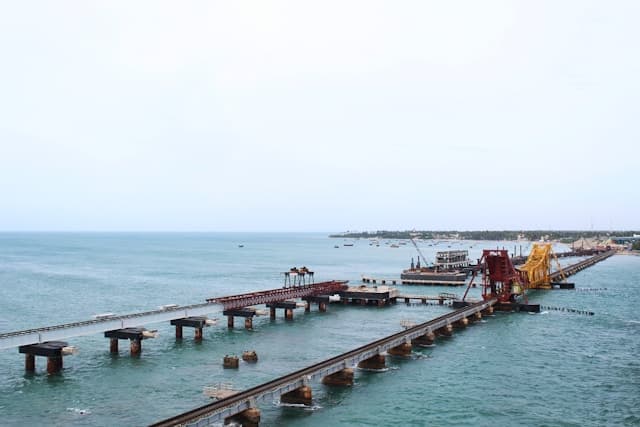
Pamban Bridge

History and technical speciality

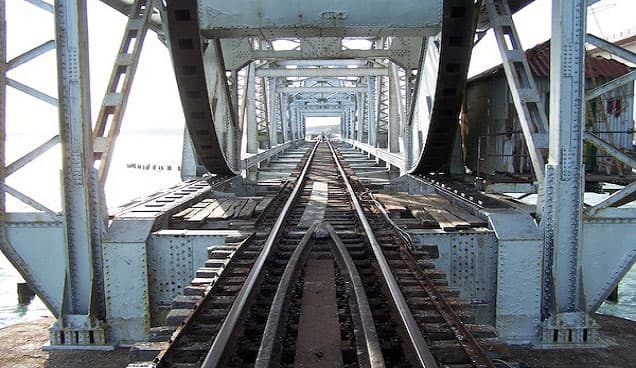
In the year 1870 the British suggested a plan to connect the mainland with the island of Pamban. The whole idea was to enhance trade with cylone. However the actual construction started in the year 1911 and completed by February 1914. Recently in 1988 the road bridge was opened. The Pamban Bridge Rameswaram despite being a conventional one that rests on concrete pillars also has double leaf bascule section. They are special Scherzer rolling type lifting spans.

Scenic Beauty

The scenic beauty of the Pamban is beyond description. The average speed of train is lowered while crossing on the Rameswaram Bridge so that passengers get a chance to enjoy the scenic beauty. The blue water of the mighty Indian Ocean is so serene to watch. The train passes over the Indian Ocean. The Indian Ocean in itself needs no introduction. It is huge and majestic. The aura of the Indian Ocean and its serene water is supreme.
More to know

Pamban is said to have the corrosion and cyclone prone location. That’s how the maintenance of the Pamban bridge is a challenge well accepted by the authorities.

Pamban Bridge

Name of the BridgeAnnai Indira Gandhi Bridge
Commonly referred NamesIndhira Gandhi Bridge Pamban Bridge Pamban Road Bridge
Opened on2nd October 1988
Structural DesignArch Bridge
Length Of Pamban Bridge2,345 KM
LaneTwo Lane
RegionOver The Palk Strait
Location28°24'16.7"N 79.188922°E
Number Of Pillars (Piers) Holding Bridge79 Pillars
Number Of Pillars (Piers) Stands Inside Sea64 Pillars
Maximum Height Of Bridge From Sea Level17.68 M
Connecting PlacesMandapam & Pamban

Planning & Construction

Pamban is said to have the corrosion and cyclone prone location. That’s how the maintenance of the Pamban bridge is a challenge well accepted by the authorities.

This was an initiative of the British in India to connect the main land of India with the Pamban island. They were wise in their decision in order to connect the 2 geographical destination, to enhance trade. The british in India developed interest in trade with Ceylon. Ceylon now known as Sri lanka is separated from India by a narrow stretch of water called the Palk strait.

The construction work started in the year 1911 and completed in 1914. Being located at a cyclone and rust prone area the planning and construction of this Pamban Bridge Rameswaram took time and expertise.

Planning Image

The engineering of the Pamban Bridge Rameswaram is so wonderful that it has double leaf bascule section in the bridge. Rest part of the bridge rests on the concrete design like a conventional rail bridge. The bascule section of the bridge allows it to raise and let ships pass. These are operated by manual lever. The design of the bridge is absolutely praise worthy. The Planning of the bridge took approximately 4 years.

In the year 1988 a road bridge parallel to the rail bridge has been opened for vehicles to cross the Indian Ocean and reach the island of Pamban. This is truly an amazing part of the country to take back memories for a lifetime.